All posts by Todd

Archbishop Parker’s Psalter

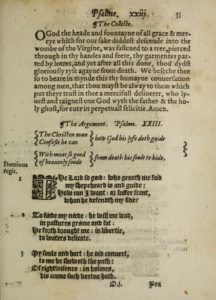
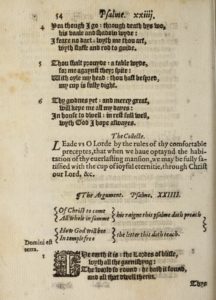
In 1567, Archbishop of Canterbury Matthew Parker published a translation of the Psalms in verse. You can read more about it at http://www0.cpdl.org/wiki/index.php/The_Whole_Psalter_Translated_(1567) . Thomas Tallis wrote a collection of 9 tunes using the meters found in Parker’s verse, so that any psalm in the collection may be sung to one or more of the melodies.

I reset Tune 8 with Psalm 67 to better fit a modern choir.


The third tune was used by Ralph Vaughn Williams in his “Fantasy of a theme by Thomas Tallis”. Tallis used Psalm 2 as his example for that melody, but Psalm 23 would work with it also.


Where can I find early music to get started?

The biggest collection is https://pennsicdance.aands.org/pennsic47/Pile2018.pdf

Another large collection that is free for SCA musicians is at http://sca.uwaterloo.ca/sca/Hendricks/

If you want to play in Ansteorran dance bands, buy Al Cofrin’s book at https://www.istanpitta.com/…/book-early-period-popular…/

Other music to start with: http://www.twmarsh.net/music/2015/09/dance-consort-music/ and http://www.twmarsh.net/…/09/instrumental-consort-music/

Elizabethan Music class notes

I taught a class at King’s College 2016 on Elizabethan Music. These are the songs I used as examples.

Song Composer Year Album Artist Description
Vigilate William Byrd 1589 English Renaissance King’s Singers Motet for 5 voices, from Cantiones Sacrae.
Browning My Dear Clement Woodcock 1574 Elizabethan Consort Music, 1558-1603 Hespèrion XX, Jordi Savall Instrumental, string consort
Have I Found Her Francis Pilkington 1613 All At Once Well Met: English Madrigals King’s Singers Madrigal
It fell on a summer’s day Dr. Thomas Campion, lyrics;  Philip Rosseter, music 1601 Campion: Elizabethan Songs Drew Minter countertenor – Paul O’Dette lute Voice and lute, bawdy song. From “A Book of Ayres”.
Tan tara ran tara cries Mars own bloody rapier Thomas Weelkes 1608 Waytes: English Music for a Renaissance Band Piffaro Shawms and sackbut, originally a madrigal for 3 voices
All as a sea William Byrd 1588 William Byrd: Psalmes, Sonets & Songs, 1588 Anthony Rooley, The Consort of Musicke Voice and string consort
April is in My Mistress’ Face Thomas Morley 1594 The English Lute Song Ron McFarlane Lute; Julianne Baird Soprano Madrigal, Voice and lute
If ye love me Thomas Tallis 1560 The Tallis Scholars sing Thomas Tallis The Tallis Scholars Anthem, 4 part acapella, text from John 14: 15-17 (KJV)

He asketh nought but that is His

In 1399, after John of Gaunt died, the king disinherited Gaunt’s son, Henry of Bolingbroke, who had previously been exiled. Henry invaded England in June 1399 with a small force that quickly grew in numbers. Claiming initially that his goal was only to reclaim his patrimony, it soon became clear that he intended to claim the throne for himself.


“My gracious lord, I come but for mine own.”
Henry Bolingbroke, The Tragedy of King Richard II, Shakespeare, 1597, Act 3, Scene 3


“He asketh nought but that is His.”
Christmas Carol: Now May We Singen as it Is, Trinity Roll, 1420

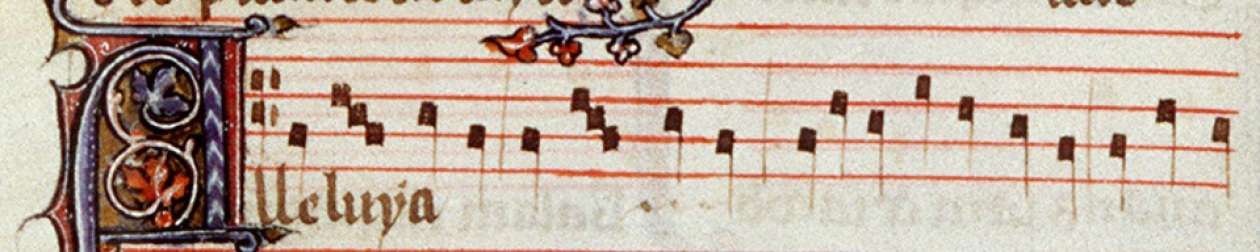
 The Trinity Roll is a collection of carols including “Deo Gracias Anglia”, the Agincourt Carol. It is a scroll of parchment housed in Trinity College, Cambridge (Manuscript O.3.58).  It was written about 1420, the year that King Henry concluded the Treaty of Troyes and became regent and heir apparent to the French throne, and then married Catherine of Valois.

 “Deo Gracias Anglia” is obviously written to praise the King. Was “Now May We Singen as it Is” also written to praise the King’s father Henry IV by making a comparison to Christ? The carol begins:

This babe to us that now is born,
Wonderful works He hath ywrought,
He would not lose what was forlorn,
But boldly again it bought;
And thus it is,
For sooth I wis,
He asketh nought but that is His.

 And later:

His ransom for us hath ypaid.
Good reason have we to be His.

 So, the carol says directly that Christ ransomed us so we should serve him. Since He has already paid the price, “He asketh nought but that is His.”

 The story of Henry Bolingbroke coming for what already belonged to him was well enough known 200 years later that it was included in the play. Wouldn’t it have been known 20 years later? Was this such a common phrase and concept that two similar references in 20 years is unsurprising, or is the lyricist intentionally echoing the famous story about the King’s father?

I don’t think we have enough information to prove it either way, but it is interesting.
 

Medieval Christmas 2016

I’m planning to focus this year’s Medieval Christmas on 15th century English carols. I may have to make a 15th century houpelande and chaperon. Four of them are from the Trinity Roll, at Trinity College, Cambridge,  MS. O. 3. 58, from about 1420.

Alamire made an excellent recording of these carols.


Song Source Notes
Nova, Nova 15th century English Choir on chorus, solo on verses
Salutation Carol 15th century English Choir on chorus, solo on verses
Coventry Carol 15th century English  4 part
This Endris Night 15th century English  Unison, 15 verses, Harp
There is no rose of such virtue Trinity Roll  2 part
Now may we syngyn Trinity Roll  2 part
Nowel sing we now Trinity Roll  2 part
What tidings bringest thou messenger? Trinity Roll  2 part