All posts by Todd

Medieval Christmas 2015

These are the songs and program I’m planning for the  Medieval Christmas Program 2015   service on December 6th.

Order Song Source Performers
1 Laudemus Virginem

Cannons

Llibre Vermeil de Montserrat, late 14th Century Catalan Choir, 2 part canon
2 Verbum Caro Factum Est

Verbum-Caro-Factum-Est

Piae Cantiones 1582, probably 14th Century Choir unison on chorus, solo verses, percussion, instruments
3 Nova, Nova

Nova-Nova

15th Century English Choir unison on chorus, solo verses
4 Los Set Gotxs Estampie Llibre Vermeil de Montserrat Instrumental, Todd
5 In Dulci Jubilo

In Dulci Jubilo

14th Century German Choir, congregation, piano
6 Quem Pastores

Quem-pastores-laudavere

14th Century German Duet and harp
7 Mariam Matrem virginem

Mariam Matrem

Llibre Vermeil de Montserrat Choir unison on chorus, solo verses, organ
8 Cuncti Simus Concanentes

Cuncti Simus

Llibre Vermeil de Montserrat Choir unison on chorus, solo verses, percussion
9 Veni, Veni Emanuel

Veni veni duet

Lyrics 9th Century, music 15th Century French #211 Choir, congregation, piano
10 Splendens ceptigera Llibre Vermeil de Montserrat Choir, 2 part canon
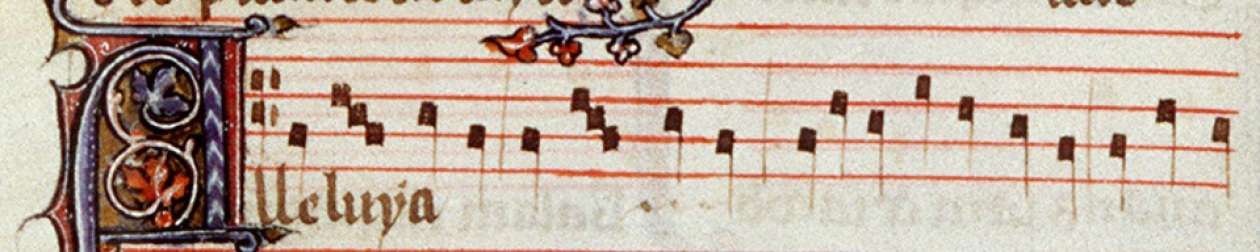
11 Alle Psallite Cum Luya Montpelier Codex Trio, Instruments

Dance Consort music

The Ansteorra Dance Consort is preparing these pieces:


Branle Simple, Thoinot Arbeau, http://sca.uwaterloo.ca/Hendricks/Arbeau/double.pdf

Branle Double, Thoinot Arbeau

Branle de Bourgoigne, Thoinot Arbeau

Branle Gay, Thoinot Arbeau

Branle de Chevaulx, Thoinot Arbeau, http://sca.uwaterloo.ca/Hendricks/Shawm/horse.pdf

Heart’s Ease, Playford, http://sca.uwaterloo.ca/Hendricks/Playford_new/heartsez.pdf

Half Hannikin, Playford, http://sca.uwaterloo.ca/Hendricks/Playford_new/halfhann.pdf

Hole in the Wall, Playford, http://sca.uwaterloo.ca/Hendricks/Playford_new/hole_sum.pdf

Gathering peascods, Playford, http://sca.uwaterloo.ca/Hendricks/Playford_new/peascods.pdf


Instrumental Consort music

The Ansteorra Instrumental Consort is preparing these pieces:


Dit le Bourguygnon, anon., http://sca.uwaterloo.ca/Hendricks/Renaiss/dit.pdf

Jouyssance vous donneray, Thoinot Arbeau, http://sca.uwaterloo.ca/Hendricks/Arbeau/jouyssan.pdf

Bergerette: Sans Roch, Tylman Susato, http://sca.uwaterloo.ca/Hendricks/Renaiss/bergeret.pdf

La Battaille (Pavane V), Tylman Susato, http://sca.uwaterloo.ca/Hendricks/Renaiss/battaill.pdf

La Morisque, Tylman Susato, http://sca.uwaterloo.ca/Hendricks/Shawm/moris_a.pdf

Grimstock, Playford, http://sca.uwaterloo.ca/Hendricks/Playford_new/grimstoc.pdf

Nuttmigs and Ginger, anon, http://sca.uwaterloo.ca/Hendricks/Holborne_waits/nutmegs.pdf

Now, o now I needs must part, John Dowland, http://sca.uwaterloo.ca/Hendricks/Dowland/nowonow2.pdf


Sonnet: Seeds

Like as a farmer scat’ring seeds in Spring,

a noble Lady spread her kind words there,

and unexpectedly she seemed to bring

new life to ground so recently laid bare.


And if that ground seems lavishly well sown,

it is no fault of hers, but of her son.

She tarried but to gather in her own

and seeds, by chance, fell as she watched him run.


Or, was that seed yet dropped there by her choice

in hope that it may grow? And do I see

in her attentions and hear in her voice

what comes from her, or comes from my fancy?


Fancy or no, I’ll tend this seedling well.

What harvest comes, still only time will tell.


(Nov 20, 1994)

Elizabethan Cultural Literacy

Cultural Literacy is the common language used within a culture to express ideas without explaining in detail. It reflects the shared experiences and stories of the culture. For example, people in the SCA know that “call the blow” means to acknowledge your mistake, but others would not understand it. If you talk about “crying wolf”, “Cupid’s arrow”, “the road to Jericho”, or “met his Waterloo” most Americans will understand. Cultural literacy helps to define a group, and brings its members closer together. As we try to understand a culture that existed centuries before we were born, it would be helpful to know what its cultural literacy was.

Elizabethans knew Greek mythology and medieval stories like King Arthur or Robin Hood. The second most popular book, after the Bible, was “Acts and Monuments of Martyrs” which is more commonly knows as Fox’s book of Martyrs. This detailed the deaths of famous and recent martyrs, especially protestant reformers.

Perhaps the most famous renaissance book is “The Book of the Courtier” by Baldesar Castiglione. He describes discussions at the court of Urbino about the ideal courtier. It was published in 1528 and translated into English by 1561. It was widely read in the renaissance throughout Europe, and was considered to be the definition of courtly behavior.

Another popular book on etiquette was “Galateo” by Giovanni Della Casa. It was published in 1558 and translated to English in 1576. It has long been out of print. In the Renaissance if someone was rude it was said that he “did not know his Galateo”. Like quoting Miss Manners, people would make their point by saying, “Monsignor Della Casa says …”.

Other Elizabethan books that describe popular culture are Benjamin Harrison’s “Description of England” and Stowe’s “A Survey of London”. These describe occupations, neighborhoods, diet, clothing, and a wealth of other useful details. Phillip Stubbes’ “Anatomy of Abuses” is a complaint about the extravagant lifestyles of Elizabethan courtiers. He explains in great detail what they do and what he doesn’t like about it.

Sometimes modern books about the time can give the modern reader a better understanding of the culture than period sources. A good one is “Daily Life in Elizabethan England” by Jeffrey Singman. Singman was one of the founders of the “Trayn’d Bands”, another living history group.

The best book for understanding Elizabethan ideas is “The Elizabethan World Picture” by E. M. W. Tillyard. He describes the medieval and renaissance concepts of order, and discusses the differences. This short book will help you understand many of the concepts, jokes, and sayings of period authors. It is often used as a college textbook, so you can sometimes find it used in college bookstores.

If you read the stories, plays, sermons, and advice books of a culture, you can understand it and portray it better.
Sonnet: The Wedding Feast

As beaut’ful bride stands with the conf’dent groom,

the marriage will be great that starts this day.

Proud families and friends here in this room

hear love, respect, and joy in all they say.


To spend an hour in such good company,

with friends both old and new, to celebrate

and share their wedding joy, it seems to me

that this life has no pleasure half as great.


E’en as the mist doth vanish with the sun,

so fears and worries vanished with this day.

May all the problems of their life so run,

testing their strength, then mist-like fade away.


May, as their journey now together starts,

God’s wisdom fill their minds, and love their hearts.

Sonnet: Apples

Fair Atalanta made her suitor’s run

a footrace, betting life against her hand.

Hippomenes had apples like the sun,

a gift from Venus, and used them as planned.


The apples, o’er the race, the maiden chose.

Forgetting Venus, both were punished. Yet,

my mistress’ golden apples rival those

that foolish Atalanta stopped to get.


And o’er this fruit my mistress’ beauty shines

with courtesy and courtly grace most rare.

For favors giv’n, she proper tribute finds

(and would quickly correct me if I err).


Though apples Atalanta’s folly showed,

with them my mistress’ wisdom is bestowed.

Sonnet: Aristotle

E’en Aristotle, Wisest of the Greeks,

the great philosopher of ancient days,

upon first hearing a fair maiden speak

forgot his wisdom and his noble ways.


This maid, who did hear Aristotle chide

his student for his love-struck actions, then

by trickery the Master she did ride

to demonstrate love’s power over men.


So, if I seem a fool for writing verse,

or fawning o’er a love that’s newly met,

your beauty could make men do much that’s worse.

I’ll fear no scorn, the precedent’s been set.


If Aristotle, how e’er wise, did fall,

then none, for love, can blame me after all.


Based on the story of Aristotle and Phyllis, which was popular in the middle ages.  See http://www.jehsmith.com/1/2013/04/phyllis-rides-aristotle.html for the story.